
NBA Star James Donaldson: From Brink of Suicide
Updated: 6 hours ago

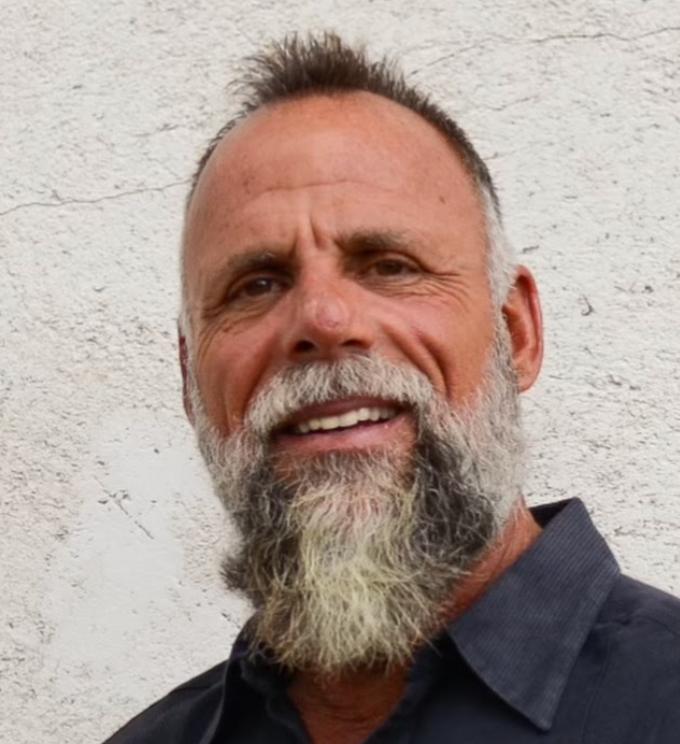
Our Amazing Greats host, Joe Micheals, really gets to the emotional heart of NBA star James Donaldson.
At 7’2 James played two decades in professional basketball, including the NBA's San Diego and Los Angeles Clippers, NY Knicks, Utah Jazz. Dallas Mavericks and the Seattle Super Sonics.
Prepare to be moved by James’ authentic story of depression and his being on the brink of suicide. Hear how God walks with him down his path of depression and how James came through it, committed to helping others deal with dark times. Plus he'll share his vision for Seattle as a mayor candidate and we'll ask him when the Super Sonics will be back to the city he loves.

JAMES DONALDSON AT A GLANCE
Former NBA All-Star, businessman, author, and mental-health advocate who shares his journey from professional basketball and business success through a life-threatening health crisis, depression and suicidal thoughts to renewed purpose through faith and service.
Topics
NBA · Seattle SuperSonics · Faith · Depression · Suicide prevention · Mental health · Purpose · Business · Basketball · Seattle · Leadership · Resilience
His Faith Journey
Christian upbringing → personal faith from childhood → NBA and business success → catastrophic health crisis and personal losses → faith remains intact through depression → renewed purpose → mental-health and suicide-prevention advocacy
This Episode Explores
James Donaldson's unlikely path into basketball
His 20-year professional basketball career
Playing for the Seattle SuperSonics, Mavericks and Knicks
Becoming an NBA All-Star
The injury that inspired the Donaldson Clinic
His life-threatening aortic dissection and emergency surgery
The losses that contributed to his downward spiral
His battle with depression and suicidal thoughts
How his faith remained intact during the darkest period
Discovering a new purpose through mental-health advocacy
His work with young people and men
His views on Seattle politics and civic issues
His thoughts about the return of the SuperSonics
Questions Answered
Who is James Donaldson?
How did James Donaldson get into basketball?
How long did James Donaldson play professional basketball?
Was James Donaldson an NBA All-Star?
What happened to James Donaldson's health?
How did James Donaldson's business career develop?
What led James Donaldson into depression?
How did James Donaldson experience suicidal thoughts?
How did James Donaldson's faith help him through crisis?
Why did James Donaldson begin speaking about suicide prevention?
Why does James Donaldson focus on young people and men?
What does James Donaldson say about asking for mental-health help?
What does James Donaldson say about the Seattle SuperSonics?
Core Story
James Donaldson's life moved from an unexpected basketball career and NBA success to a thriving Seattle business, then into a devastating period of medical crisis, financial loss, the death of his mother, the end of his marriage, depression and suicidal thoughts. Through that darkness, Donaldson says his faith remained intact and that God eventually gave him a renewed sense of purpose. He went on to create a foundation and use his public platform to speak about mental health and suicide prevention, particularly among young people and men. The episode also explores his involvement in Seattle politics, his views on race and opportunity, and his hopes for the return of the SuperSonics.
Podcast Transcript: James Donaldson — From NBA Star to Purpose After Suicide Crisis
Amazing Greats with Ric Hansen
Introduction
Ric Hansen:Hi there, and welcome to the Amazing Greats podcast, Episode Number 13. Ric Hansen here.
Wow, this one is powerful. Our Amazing Greats host this time around is Joe Michaels, and he really gets to the emotional heart of NBA star James Donaldson.
Prepare to be moved by James's authentic story of depression and being on the brink of suicide. How did he get there after a hugely successful career in sports, then as a businessman?
His downward spiral started with a massive health issue, and then everything fell apart. Hear how God walked the dark path with James and how he found purpose in his struggles.
From seven-foot-two NBA star to the lowest of lows, and now he's active in politics to help Seattle with plans for its future.
Oh yeah, you're going to find out when the Sonics will return to Seattle.
I think you'll really enjoy this episode. It's a great one and very impactful. And at any moment, if you find this interesting, hit the like button and please share it with your friends.
Here we go with Joe Michaels and James Donaldson.
James Donaldson's Background and Faith
Joe Michaels:Welcome to Amazing Greats. Today we have the pleasure of speaking with James Donaldson, who has just written the book Celebrating the Gift of Life: From Suicide to Purpose and Joy.
James, welcome to our podcast today.
James Donaldson:Thank you so much, Joseph.
Joe Michaels:Great to see you. Great to meet you, actually.
So, James, congratulations on the book, first of all. The title itself is a powerful story to unpack there. I hope we can get to a few of the special messages that you want to share today.
But first of all, just tell me a little bit about where you're from and give me a real quick synopsis up to the point where you met George Raveling.
James Donaldson:Yes. Well, I'm from Sacramento, California, and the son of an Air Force 20-year veteran sergeant.
We were actually at Travis Air Force Base in my early years after being born over in the UK. My dad was stationed there, so we came back to the States when I was two years old and went over to Travis Air Force Base for a few years. Then we moved over to Sacramento about second or third grade or so, and I grew up there.
Joe Michaels:Were you raised in a Christian home?
James Donaldson:Very much so. My dad, especially. He was very, very strong in his faith and very involved with the church.
I grew up in the Baptist church, Christian Baptist Church. He was a deacon, he was an usher, he was a treasurer—he fulfilled almost every office position there.
So we went to church with him every single Sunday growing up as children. My mom went along with us most of the time. Later, as we got older, she stopped going so much. But we kept going as kids, and I kept going throughout the rest of my life. I still go every Sunday.
Joe Michaels:I don't know if you were like me, but James, I was raised in a Christian home too. God was kind of a concept for a long time until He really became personal to me.
Do you have the same kind of experience?
James Donaldson:No. I remember God being personal with me from my early, early years.
As an eight-, nine-, ten-year-old, I'd go into Sunday school. Matter of fact, as I got to be a young teenager, I was teaching Sunday school to the really young kids for a year or two.
So I knew the Bible, I knew Scripture, I knew the Lord, and it's been a constant presence in my life, having that kind of faith.
Discovering Basketball
Joe Michaels:You were playing basketball, obviously, when you were a kid in high school.
James Donaldson:To the contrary, I wasn't playing basketball.
My mom and dad really stressed education for us. Even though my dad looked like a great athlete—6'3", 230 or so—he looked like he could do everything. He stayed in great shape with all the push-ups and sit-ups and jumping jacks from his military training.
But sports was something that came really late to me. Not until I got to my senior year in high school did I officially play my first basketball game.
That was after a whole year of practice during my junior year, just to get familiar with the game.
I was a big kid. I was already 6'9", 6'10", and had never played basketball before. The coaches were drooling, hoping and wishing I would come out. But I turned them down my sophomore year, my freshman year, and finally agreed to start practicing during my junior year just to see if I could get the hang of it.
Joe Michaels:So how did you get connected with WSU then?
James Donaldson:During that senior year that I played, I played okay—average enough, maybe 10 or 12 points, 10 or 12 rebounds a game. It wasn't anything spectacular.
Matter of fact, I was overshadowed by Bill Cartwright, who went on to great NBA fame for many years with the Chicago Bulls.
Bill and I grew up in Sacramento together. He was actually in a suburb, Elk Grove, of southern Sacramento. So we played against each other during my senior year, twice—a home and away game.
Bill was the talk of the town from the time he was in the fourth grade or so playing basketball. And then here I come along.
No one really knew about me, but because Bill Cartwright was in the same league in the same town, scouts were flocking to Sacramento from all over the country.
One of those scouts happened to be from WSU—George Raveling and his staff—and they saw me as a kid who had tremendous potential. We just didn't know how to tap into it.
So he took a flyer on me. He said, "Let me get you an athletic scholarship at WSU. You're gonna sit the bench the first couple of years and just practice and get bigger and stronger and tougher and learn the game."
And that's exactly how it all played out. I didn't really play serious college basketball until I was a junior at WSU.
The NBA and the Seattle SuperSonics
Joe Michaels:And obviously, being in Washington State, that caught the eye of the Sonics, right?
James Donaldson:Yes. It turned out that George Raveling was a good friend, a childhood friend, of Lenny Wilkens, who was the coach of the Sonics at the time.
The Sonics went on to win the NBA championship in 1979. I was still at WSU finishing up my senior year.
The Sonics went ahead and drafted me, I think on the advice or the nudging of Coach Raveling to his good friend Lenny Wilkens, just to see if he'd take a chance on me.
I wasn't a first-round pick. I was a fourth-round pick, probably the fourth or fifth pick that year in the draft.
The team had just come off their world championship season, so there was no room at the end, as we say, for a young guy like me.
On the advice of my agent representative, I decided to go over to Italy and play my first professional year in Italy, 1979-1980.
Joe Michaels:Just to break into that lofty group of guys that won a championship, that's pretty amazing.
James Donaldson:Yeah, it really was.
It was probably the best way for me to break into the NBA at the time because there wasn't a high expectation on me of what I needed to provide right away. I could still learn the game, I could still progress, which I did.
Having a coach like Lenny Wilkens was probably the best kind of coach for me because he was structured, disciplined, the strong, silent type. And he had a whole team of veteran players around that I could come under the wings of as they took me in and helped show me the professional game.
Joe Michaels:Were you an All-Star as a Sonic?
James Donaldson:That was in 1988, when I was with the Dallas Mavericks at the time.
Joe Michaels:With the Mavericks. Was that the highlight of your career?
James Donaldson:On an individual basis, it probably was the high point of my career.
Basketball's very much a team game. I'm very much a team player, a team person. So the real highlights, I think, were having our teams go as far as they did.
We never won a championship in my 14 NBA years. We got close.
We made it to the Western Conference Finals with the Mavericks and lost to the Showtime Los Angeles Lakers in seven games.
Then we made it to the Eastern Conference Finals and lost to Michael Jordan and the Chicago Bulls in seven games when I was with the New York Knicks.
Close, but no cigar.
Life After Basketball
Joe Michaels:When you guys are on the road, my impression is you probably hang out with the competition—go to barbecues at their house and everything, and then just beat the heck out of them when you get on the court.
Is there a lot of fraternizing with the other teams?
James Donaldson:Typically, yeah. Especially if you went to school with some of your former colleagues or played against them at the university or college level.
I had several friends around the league that I would catch up with after a game, maybe go over to their home for home cooking or go out on the town to a nice restaurant and just get together like that.
That was really, really great to be able to do that.
And of course, I had a lot of extended family relatives. I mean, relatives come out of the woodwork when you get to that point.
Almost every NBA town, I had a so-called relative.
Joe Michaels:"Hey James, you got a couple of tickets for Friday night."
James Donaldson:That's exactly right. I was never one to turn down home cooking, so I would take them up on it.
From NBA Star to Business Owner
Joe Michaels:James, from the lofty highs of NBA All-Star and a remarkable career to some losses in your life, can you take us from one extreme to the other and share a little bit about what happened, how you dealt with the pain of it, and what you learned?
James Donaldson:Life was going very, very well throughout my NBA years, especially.
I actually played 20 years of professional basketball—14 in the NBA and six more years overseas in Europe. Two years in Spain, two years in Italy, two years in Greece.
It gave me the opportunity to travel the world, to learn about other cultures, other people, other histories, other civilizations, and all those friends in those Mediterranean countries.
I learned to speak the languages also. I became very fluent in Italian and Spanish. Greek was a little bit more of a challenge, but I learned basic conversational Greek.
I finally retired from professional basketball in 2000.
I had started up my business already, the Donaldson Clinic, which was a physical therapy sports rehabilitation clinic.
I started it up in 1989 after a really serious knee injury in 1988 that had everyone doubting whether I'd ever play the game again or whether I'd walk normally without a limp or a frozen knee.
I had a ruptured patellar tendon.
The doctors put me all back together again. After six or eight months of real arduous physical therapy, two or three days a week, two or three hours at a time, I had what's called a light-bulb moment.
Here I am, 32 years old—old for a basketball player—and thinking, "Well, if I can't come back and play again, and I had my doubts also, what am I going to do?"
I was a college grad. I had other interests, but I didn't have a plan for my basketball career stopping so suddenly.
The world of physical therapy came to mind because I was surrounded by these great physical therapists, exercise physiologists, athletic trainers, surgeons—everybody.
Like Humpty Dumpty, they put me back together again.
With all the hard work I put into it, I was able to come back and resume my basketball career for another 10 years on a surgically repaired patellar tendon.
That's what got me into the world of physical therapy.
As I was in the rehabilitation centers, I'm thinking, "Wow, this is what I want to do. I want to start up a business of physical therapy, helping other people out with these serious injuries that they may go through and really give back to the community that way."
The Donaldson Clinic was born out of that, and that ran successfully for 28 years until 2018.
I was the owner of it. We had a big staff of 35 to 45 employees and multiple locations around Seattle at some point—up to five locations.
It really was going well. That's what I took a great amount of pride in doing after my basketball career.
The Medical Crisis
James Donaldson:My life's going well. I'm still in great shape. I'm in the gym five or six days a week, a couple of hours at a time, lifting weights and doing all those things.
I'm running outside, jogging with my jogging partners two or three or four days a week, two or three miles at a time, no problem.
Healthy as can be. Vegetarian for 35 years or so, doing all the right things. Never smoking, never drinking, never taking drugs.
I was really in top-notch shape.
When I hit 57 years of age, I'm out there trying to play a round of golf with my friends.
I came to the golf course that morning feeling nauseous, sweating profusely, my back was killing me.
I told the guys, "Hey, I don't think I can play today. I think I'm gonna go see my doctor and see what's going on."
So I made the 10- or 15-minute drive over to my doctor's office. I don't remember this drive at all, but apparently I did. It was only me in the car.
I got to his office and vaguely remember seeing the reception counter.
This was January 3, 2015.
Everything went black.
According to the doctors and staff, I fell out right there in the reception area and totally blacked out.
They did a quick diagnostic scan on me and determined it was my heart that was having a major issue—an aortic dissection and an aortic aneurysm.
It was swelling and swelling to the point of almost bursting.
If that thing would have burst, you get about 10 heartbeats left before you just bleed out on the spot. There's absolutely nothing anybody can do.
They determined that's what was going on. I still had a thin membrane holding the aorta together.
They rushed me by ambulance to the emergency room.
I underwent a 12-hour emergency open-heart surgery to repair that and woke up after a five-day medically induced coma.
I woke up two weeks later with no idea of what had happened to me.
It took a couple more weeks for me to regain my senses and realize where I was and what had happened.
I spent two and a half months in intensive care.
That was the beginning of my serious downward spiral, both physically and mentally.
An accumulation of things over the next two or three years really took me to the verge of suicide.
The Business, Financial Pressure and Loss
James Donaldson:In 2015, I was virtually just totally wiped out the whole year. I was flat on my back the rest of the year, trying to recover from the major open-heart surgery.
I was no longer able to be the driving force of my business, and I left it to a management team that I had in place to manage the business for me.
Eventually we started having cash calls. We were running a little bit low on our reserves. Payroll was coming around every couple of weeks—$50,000, $60,000 right away. You gotta pay everybody.
I spent all my NBA life savings, hundreds of thousands of dollars I had saved up, into my business to try to save the business and the 25 employees that I felt very loyal and very obligated to.
That was taking a toll on me, especially emotionally, mentally and financially.
I had exhausted my savings at some point.
But let me take you back to 2016, which was another serious downward spiral.
In March of 2016, we repaired the descending aorta, which was damaged as well. But there was no way my body would take the stress of trying to repair both of those in that major surgery.
So we did the most serious one first and knew we would have to do the next one the next year when I had recovered.
March 2016, I'm back in intensive care for about a month, trying to recover, still not back at my business or work.
At this point, I lost my mother. She passed away during that time, kind of unexpectedly.
I was married at the time to a wonderful woman, and she had a young boy from a previous marriage who was about 12 or 13 years old.
We were married for five years. I was a stepdad for five years.
In June of 2016, after I was finally up and on my feet again after the second surgery, she picked up and just walked out of the marriage without any explanation, no notice, no message, nothing.
I didn't see anything like this coming. I never thought that this would ever happen to me or to us.
Once she got her green card, once the little boy got his green card, they became U.S. citizens. She left the marriage and never looked back, and I've never spoken to her since.
This was tough because this was really the beginning of the downward spiral mentally.
For the next several months, six months, eight months or so, I'm coming home to a big empty house all by myself.
The sound of laughter, children playing, home-cooked meals on the stove—those were gone.
I'm coming home to an empty house, a big house, all by myself after a long day at work.
I was still functioning well during my workday. People never had any idea what was going on.
I still looked fine, still laughed, still lighthearted, but they had no idea.
The nighttime was the worst time because now things are quiet, I'm settled down, I have nothing going on except for my thoughts, and the walls of the house are closing in on me.
This went on for several months throughout the summer of 2016, the fall, the winter into 2017.
I kept trying to shake it off and feel like everything was going to be okay.
Financially, I was financially strapped. I had spent my life savings, so I was having trouble keeping up with my mortgage payments.
Eventually, the house went into foreclosure and I lost it to a short sale and through bankruptcy.
My whole world was just turned totally upside down.
I don't know how I made it through other than, as I tell folks and write about it in my book, even with God's grace.
When absolutely nobody else was around, I knew God was there with me. I felt His presence.
Of course I asked questions once in a while: "Why are You putting me through this?" or "Why are You allowing me to go through this?"
I didn't know the answer at the time.
I found out later.
Finding Purpose in the Darkness
Joe Michaels:What was the answer?
James Donaldson:The answer was, as the darkness eventually started lifting at the end of 2018, by then I had pulled the plug on my business, so it was over.
I had filed for bankruptcy, and it was over.
I had lost my home, facing eviction, so it was over.
The darkness started lifting just a little bit at that point, and I could see that I had a reason to still be here.
That was to share my story and to let people know that they can make it through these difficult times too.
God gave me a vision of a foundation, a nonprofit foundation, which I set up.
It was allowing me to go around and speak to school-age children, especially, about depression and anxiety—especially middle school and high school students.
I was doing that before our pandemic shutdown.
That was the reason I think God left me here.
He said, "James, you got a platform. You're a former athlete, you're a business guy, you're a community guy, you're well-educated, well-spoken, you're larger than life, taller than life."
And I can use this platform to speak out about mental health awareness and suicide prevention, especially to our communities of color and to our men of color, where mental health is such a big taboo and stigma.
We just won't talk about it and won't acknowledge it.
Mental Health and Communities of Color
Joe Michaels:Why do you think that is, James?
James Donaldson:I think a lot of our communities of color have been so directed by their faith, which is good.
Prayer is good. God works.
But God also gives us the intelligence and the wisdom to make good choices, which is to reach out for help.
Sometimes we get so bound to our traditional faith of saying, "God will take care of me. I'm gonna pray about it," when you actually need some medical attention.
You might need some medication. You might need a behavioral health counselor. You might need all kinds of things that are readily available.
But if you're not going to go there because of the fear of what people may say or what your community may think, you're not gonna do that.
In our Black community growing up, just talking and casual fun with each other, we can easily cut our eyes at somebody and say, "You crazy."
Even though that doesn't really hurt you at that point, it still stings a little bit when somebody calls you crazy.
And then when you do come down with mental health issues, the last thing you're gonna do is let anybody know that you might be crazy.
I think that's a big reason why communities of color don't talk about these issues.
Joe Michaels:I'm talking about Black communities, brown communities, Native Americans, especially, Asians, especially—the men.
James Donaldson:It's still relatively new and coming to the communities of color.
I had a behavioral health counselor that my doctor assigned to me, but I found out with working with behavioral health and mental health professionals that less than 2% nationwide are mental health professionals of color.
I'm talking about every ethnic group is in that little 2%. So it's a lily-white profession.
Many times they have no idea how to relate culturally to somebody who's of a different ethnicity.
I had the same issue with my behavioral health counselor.
I had a young, mid-20-something-year-old Caucasian woman who had just graduated and just started practicing.
She knew absolutely nothing about me and my culture, let alone me being an older man compared to her.
She had no idea about African-American communities.
Joe Michaels:Yeah, your life experience.
James Donaldson:Absolutely not.
Her best advice to me, and I say that kind of tongue-in-cheek, was to go home and count sheep every night so I can get to sleep.
I'm like, "Come on. I need hundreds of thousands of dollars to put into my business. That's what I need."
She couldn't relate to that.
The Darkest Moment
Joe Michaels:Did you have an issue of faith during this time at all? Did you lose your connection with God? I guess they call it the dark night of the soul, or have doubts about God's provision?
James Donaldson:No. That's the one thing that stayed intact throughout.
I was still going to church every Sunday. I still looked the part and acted the part.
Everything looked great on the outside, but on the inside, as we say, I was tore up from the floor up.
People had no idea what I was going through.
I want to take you back to 2018.
I pulled the plug on my business.
The holiday season of 2017, between Thanksgiving and Christmas, this was the absolute worst time.
I really did not think I was going to make it through that month of the holidays at that time of year.
I'm totally alone. Everyone's busy with holiday festivities and things.
I couldn't sleep through the night to save my life. I'm waking up every night at two or three in the morning, couldn't get back to sleep.
My mind is racing 100 miles an hour with only two tracks or two thoughts.
One: how to get more money together for my business.
By now I'm going down this seedy, shady world of hard-money lending and high interest rates and loan sharks—wherever I could find money, I was trying to get it.
And the other thought was how to exit this world.
I started putting plans together of ways to end my life and commit suicide.
I had three or four different plans all mapped out, all ready to go.
Then an impulsive voice started coming into my mind.
I'm not an impulsive guy by nature. I'm very thoughtful, very methodical, very plotting.
But that impulsiveness really scared me because it would tell me on occasion, "Just go ahead and do it. You got your plans already mapped out. Go ahead and do it. Do it, do it."
I'm like, "Whoa, this is getting scary now."
At that point I knew something was really wrong with me.
That's when I reached out to my medical family physician to see if he could help me.
I thought I was just having a sleeping disorder. Maybe he'd give me a sleeping pill and I'd get through the night.
After talking to him—and luckily for me, he was a very compassionate, intuitive, inquisitive kind of doctor—he took the time, an extra 15 minutes or so, even though his appointments were backing up.
He said, "Hey, let me hear what's going on and let's talk about it."
And on the spot, after all of that, he said, "James, you have got depression, anxiety, and suicidal ideations. Seriously, and we need to get you some help right now."
That was right at the beginning of 2018.
I made it through Thanksgiving. I made it through Christmas.
It was tough, tough, tough to do.
Also at that time, a young student-athlete at my alma mater, Washington State University, named Tyler Hilinski, who was the heir apparent to be the starting quarterback on the football team, took his life in January 2018 on campus.
Joe Michaels:Yes, I remember that.
James Donaldson:That shook me to my core.
It just grabbed me and said, "Hey, James, you've gotta work your way through this thing."
Mainly because people were running around the next several days and couple of weeks trying to tell Tyler's story—how great a kid he was, why they didn't see this coming, how come he didn't tell anybody.
I didn't want that to be me and my story.
I was bound and determined at that point to make it through this thing so I could tell my story.
After another 10 months of total darkness, the darkness started lifting a little bit.
God revealed to me, "James, you've got a platform. You go out and tell your story and help us help as many people as you can."
Helping Young People and Men
Joe Michaels:Is your book written kind of targeted, I'm sure, to a lot of people who are suffering this way, but it seems like you have a special heart for kids. Is that true?
James Donaldson:Yeah, I really do.
Here in the state of Washington, we lose two school-age kids every single day to suicide.
These are kids between the ages of eight and eighteen.
If you can imagine an eight-year-old or a nine-year-old having suicidal thoughts.
As I was going around to some schools before the pandemic shutdown, I'd be in front of an assembly of four or five hundred kids, and invariably, each and every time, there'd be four or five kids who would come up and talk to me and pull me aside individually. They didn't want the other kids to hear.
They would tell me, "I'm suicidal right now, and I don't know how I'm gonna make it through the night."
A 12-year-old. A 13-year-old.
Joe Michaels:It's heartbreaking, isn't it?
James Donaldson:Yes.
I couldn't do much except identify the kid to the school principal and ask them to keep an eye on this kid.
Several of the kids I exchanged my secondary phone number with so they could text me and call me.
We did that for several weeks after each one of these appearances.
I made sure they were on solid ground and continued to encourage them to hang in there.
So yes, my main focus group is our young children—middle school and high school kids.
And the other focus group is working with our men, trying to get men to realize it's okay to ask for help.
It's okay to let your ego down, get it out of the way, and reach out to your loved ones.
Joe Michaels:You guys, we have to do this because so many of us suffer alone, or we get into self-destructive behaviors of drinking and drugs and promiscuity and crazy gambling—crazy stuff that we do that is just very self-destructive because it takes us away from the pain temporarily.
But that pain is still waiting for you as soon as you go back.
James Donaldson and Seattle Politics
Joe Michaels:Celebrating the Gift of Life: From Suicide to Purpose and Joy. That's the book.
I'm sure there's a lot of helpful information in there and resources as well.
We can all benefit from this.
Well, just because of time, I'd like to shift a little bit to you running for mayor of Seattle.
Tell me your number one purpose for being—what would be the number one item on your platform?
James Donaldson:I think the thing that helped me to work through my dark, dark valley of darkness, I call it, is that during that time I had totally lost my purpose, my reason for living.
There was no tomorrow. There was no hope. It was hopelessness.
It wasn't until I regained a purpose, and that was starting up my nonprofit foundation.
That was my purpose now. This was my next chapter of life that I wanted to really embark upon.
Another purpose was looking around at our city of Seattle and realizing that we are in a bad way with our elected officials and people trying to speak for them.
I've always been interested in politics. I've run a couple of times before.
I stay involved with everything that's going around town.
That's what really motivated me.
I added it to my array of purposes that I still have to still be here.
During the summer of 2020, we had the so-called "Summer of Love," we call it up here, which was a disaster.
It really motivated me to say, "Okay, that's enough. Let me get involved with this thing, bring some real good, clear-headed, common-sense leadership to our elected official positions."
So I went ahead at that point to start thinking about running for mayor and put together a campaign team that was going to help me do that.
We're right in the middle of all that now.
I think that we have a message that resonates for the vast majority of our—I call them our non-vocal majority of residents around Seattle—who just won't speak up.
But they're miserable and they're angry and they're frustrated.
And I say, "Okay, I'll be your voice, you guys. Come on."
James Donaldson's Campaign Issues
Joe Michaels:What's the number one issue that you think we need to address first?
James Donaldson:My campaign has a kind of a three-pronged issue approach.
The first one I really want to do, because I'm a former business person myself, is to revitalize our downtown business core.
Downtown is a ghost town.
So to revitalize our downtown business core, which means helping our big businesses feel safe about bringing their employees back one of these days, but also helping our small businesses stay in business and keep them going.
Get our tourism back.
The tour boat cruise industry has been canceled in the last couple of years. But the next year, these are tens and tens of millions of dollars of tourist dollars that come into Seattle every single summer.
So that's my first approach.
My second is to regain our trust in our law enforcement.
Our elected officials here are continuing to defund the police and to strip them down to barely nothing anymore.
We've lost 200 police officers in 2020 alone, and another 70 officers already in 2021.
We can't afford that.
Who wants to be a police officer anymore when you don't have the support of the city council or the mayor and the media? Everybody's really jumping on your case every single time.
So I want to restore our police department.
I'm a big proponent of training and ongoing training, continued training.
When I was a professional athlete, we trained every single day. I was never perfect. I always still made mistakes, but we trained and we trained.
The same with police officers. They need to be training, training, training.
I want to take them off the beat a couple of weeks every quarter, sit in the classroom, de-stress, see a mental health counselor, get some additional training.
Those are the things I want to do with the police.
And I've got their support and their backing already.
The third big issue is homelessness.
We have such a lenient government here. City officials who just let the homeless roam all over town, camp anywhere they want to.
It not only looks terrible, it's very unsafe for a lot of our neighborhoods and our young children, especially.
So my next thing is to round up our homeless folks, put them into shelters.
There are a lot of buildings now that are near empty or abandoned.
Let the city pick those buildings up, and these will be places that we can house the homeless and finally get them off the streets.
Mental health issues are a big problem with the homeless.
So I think with me having my story and my compassion and empathy for anybody going through any kind of mental health challenges, that's going to resonate very well with our Seattle electorate.
Race and Opportunity
Joe Michaels:Certainly, one of the issues last summer was the Black Lives Matter issue.
Do you think racism has made any progress in the last couple of years? Do you think we're any better off now than we were in 2019?
James Donaldson:I think our society is making race an issue much, much larger, much more significant than it needs to be.
I don't think that we live in a racist society.
I know there are racist individuals who live in our society, but overall, I don't think that we have such a thing as systemic racism that is in every institution.
It's the people who make up these institutions. Some of them, yes, they have issues with race.
We need to weed them out or train them or identify them and make sure that those situations get taken care of.
But I think we live in an America now that race is less of a significant factor than ever before in our history.
The opportunities that are there for every ethnic group are just abound.
All we need to do is be able to walk through those doors that we were reluctant to walk through before, apply for the jobs, apply for the position, and be qualified.
We're much more likely to get those positions now than ever before in our history.
Education is a big key with me. It always has been.
We need to educate ourselves.
I had a conversation the other day with an African-American group here in Seattle that I'm a member of for the last 30 years.
I told them, "You know, our group, the reason nobody knows who we are and what we do, and we focus on education, is because we've become passé and we've become irrelevant."
We've got our bars set too low.
We're congratulating kids just for graduating from high school.
You know, we have a 50% dropout rate in high school around the state of Washington for kids of color.
It's no big deal to graduate from high school.
You can't compete in today's modern world with a high school degree.
All these kids I help come from China, and the kids coming from India are taking all the high-tech jobs and going to the best schools.
All these kids flooding across the border right now will be taking the non-skilled, low-wage jobs, even though it may be a $15-an-hour minimum wage.
Employers are going to pay them under the table $6 or $7 an hour. They'll take it.
And that knocks our brown and black kids out of the picture.
We're not qualified.
So we need to do a better job and not be so dependent on the government and not be a victim.
This victim mentality drives me crazy.
I could have easily been a victim with all the things I went through, but I refuse to be a victim.
I said, "Hey, I can get through this. I can overcome this. I can be better."
And I feel like I'm better than ever before because I have these real-life experiences now that I didn't have before.
Taking Personal Responsibility
Joe Michaels:I understand that in your book, one of the work pages is where you list people that you feel are making you a victim or your associated victimhood with, and then on a scale of one to a hundred, how much am I responsible for? How much are they responsible for? And try to quantify it that way.
James Donaldson:That's right.
I think when we get away from our mob mentality and sit there as an individual and be honest with ourselves, that's when we can start really evaluating who we are and where we are.
The Seattle SuperSonics
Joe Michaels:James, I've got a couple more questions to ask you just for time's sake.
First of all, give me the inside scoop on when the Sonics are gonna be back.
I'm a huge Sonics fan and I miss them dearly.
James Donaldson:It will be in our lifetime. How about that?
Joe Michaels:You're not hearing anything on the down low that you can share with us?
James Donaldson:Absolutely nothing. It's been so quiet.
They've got this remodeled KeyArena for the NHL ready to go. That's a good sign.
But have you been up on Queen Anne lately? The way they keep putting these streets on a road diet, they narrow them down to one lane now.
Queen Anne Avenue is one lane now, trying to get off Queen Anne. It's gonna be a nightmare trying to get any kind of crowd in and out of there.
It's just not built.
And the NBA has told me before, as I was a board of director for our NBA Retired Players Association, Adam Silver told me personally that that remade KeyArena will not work for the NBA.
We need to have something better.
I know Chris Hansen and Wally Walker are still planning on building their arena in SODO.
From what I heard from Wally Walker a year or so ago, that's what we need.
With that, I think five to ten years maybe the Sonics can finally come back.
We've been missing them so much.
A Dinner With Martin Luther King Jr.
Joe Michaels:If you could have dinner with anybody in history—Jesus is off the table on this one—who would you like to spend an evening with?
James Donaldson:I would love to spend the evening with Martin Luther King Jr.
I'm a student of Martin Luther King and all the work that he did, and how he could continue to have that faith and that love for humanity—the love for people who oppressed him, who hated him, and who took his life eventually.
He had such great love, and he kept saying that love is the way—nonviolent resistance.
We don't see anything but that now on the streets out here. Everything is violent and protesting.
Martin Luther King would be my guy.
His words, "content of your character," just ring and ring with me.
I certainly don't have the experience coming from his life experience, but still, for anybody, the content of your character is so important.
Joe Michaels:Yeah.
James Donaldson:We're getting so far away from that now, where everything is based on the color of your skin, and it shouldn't be. It should not be.
One Day He Would Relive
Joe Michaels:If you could relive one day of your life, is there one day that you'd like to have over again?
James Donaldson:Wow, that's a really, really good question.
I was kind of a shy, introverted kid coming out of high school.
Against—and causing great pain to my parents—I refused to go to my high school graduation.
They really, really wanted me to go. And I just wouldn't go. I just wouldn't do it.
I was shy, I was very introverted, I didn't like attention, even though I was 6'9", 6'10", 6'11".
Walking across the stage in a gown and a hat and getting my diploma—I just couldn't envision myself doing that.
I forcefully told my parents, "I'm not gonna go," and stood up to them for the first time.
I would have been the first in my family to graduate from high school. My parents didn't. They had GEDs and those kinds of things.
So I just wouldn't do it.
I'd love to have that opportunity to redo that and to make them even more proud than they have been of me anyway.
Joe Michaels:I'm sure they're plenty proud of you.
James Donaldson:Yeah, but you know, you hate to disappoint your parents and the people you love.
Closing
Joe Michaels:I just want to thank you so much for being our guest today on Amazing Greats.
Again, the book: Celebrating the Gift of Life: From Suicide to Purpose and Joy.
James Donaldson:I want to say a place where you can get it and have me personally inscribe it for you and put my name on it is directly through my website, celebratingyourgiftoflife.com.
If you buy it on Amazon and Barnes & Noble, they're not going to sign it for you. They could care less.
Buy it directly from me, I'll sign it.
We'll stay in touch. You've got my email address, I'll have your email address, and we'll keep on this journey together.
Joe Michaels:That's a great note.
I'd also like to thank George Tolls, Ric Hansen, Klem Daniels. These guys are wiring all this together for us.
And James Donaldson, thank you again.
James Donaldson:Thank you.
Joe Michaels:You're very Amazing Great. To meet you. Have a wonderful day.


Comments